Sunday, 15 February 2015

COURSE WORK GENERAL UPDATE

There are various course improvement jobs in progress, so below is a brief update about what's been happening around the course.

This post briefly covers:-

  • Greens drainage
  • 18th tee bank
  • 5th bunker
  • 6th - area left side of bridge
  • Tree work
  • 10th old tee


If you have played recently, you might be thinking - why do they keep starting something new without finishing the previous job?  

Well, mainly down to weather/ground conditions and resources.  We have a lot of work to get through and are aiming to work efficiently, so if weather or ground conditions hold things up with a certain task then we move on with something else.  

With the greens drainage work we generally get a few greens to same stage which also helps manage machine hire costs.  Also, some projects link up and we try to make use of all materials.  For example, if we remove soil from digging drainage trench, we like to use elsewhere. 

So, there is some method in the madness!


GREENS DRAINAGE


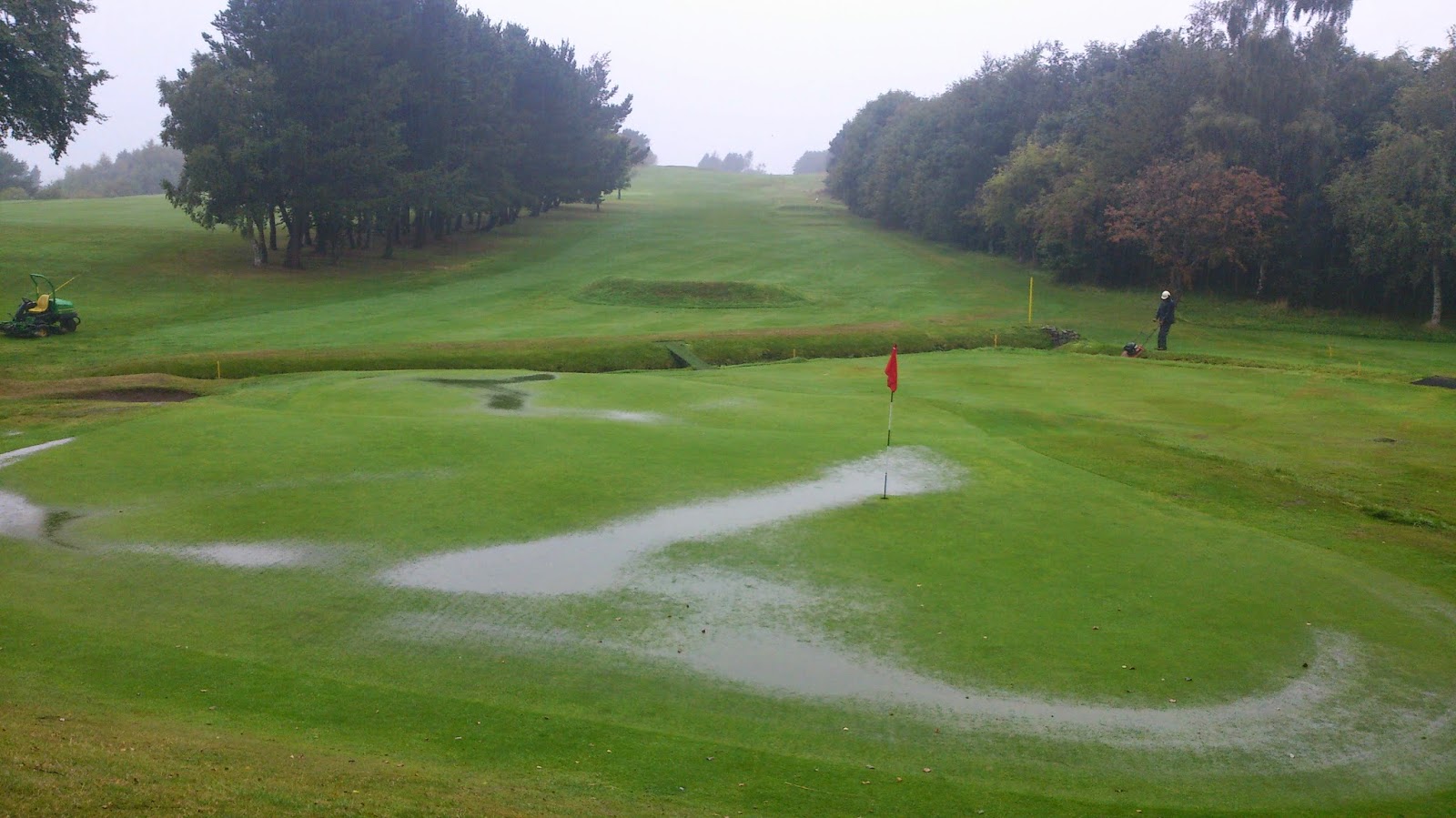
Sub surface drainage is being installed on the low lying areas of the green.  This will not be an overnight cure as additional drains will likely be required along with a reduction in thatch.  However, an improvement is expected and is certainly a big step in the right direction. 


Area highlighted where drainage is initially being installed - 3rd green.


Drainage installed with turf soon to be re layed.


Greens with work in progress so far include the 3rd, 7th, 9th and 18th with additional lateral drains to be added next winter if necessary.  Other greens are also to be included with the 2nd green a high priority next winter.  More detailed posts for each green will be posted on the blog soon so keep a look out.


18th TEE BANK


Some tee banks around the course have quite sharp edges which creates additional maintenance work over the summer.  Normally this tee bank would have to be cut with a flymo type mower which is more labour intensive.  

Now the bank has been landscaped to a better gradient, it will allow a ride on machine to mow this area therefore eliminating labour intensive flymo work. 

Other tasks on the tee itself also become easier because now the machines can turn on the bank where before it was not possible.
Tee bank re landscaped

Turf was lifted then using soil from nearby drainage work was used to re shape the bank.  Following soil preparation the same turf was re layed.  The same work is currently being done to the left side.

None of this work cost a penny!


5th BUNKER


Many bunkers on the course have an uneven base which leads to inconsistent depths of sand on the surface.  

All grass over growth around the edge was removed to leave a fresh clean edge and shape restored to original shape.

Before work started.
Base re shaped and grass over growth removed.


Once the sand was removed, some clay soil was brought in from another job (12th/13th path work) to help re shape the bunker base.

Some wet weather back in November limited the progress for this project, along with other work priorities.  Conditions are currently good (dry - rain & clay don't work well together!) and it's expected the next step will be carried out over the coming weeks.

Having an evenly shaped base will allow us to manage sand depths more easily and therefore improve playability.


6th - AREA LEFT SIDE OF BRIDGE


This sharp slope and deep hollow is labour intensive for mowing (flymo work) during the summer which is unnecessary.  

Using soil from other jobs to re landscape deep hollow.

By softening the slope and reducing the depth of the hollow will make more accessible for a ride on mower, saving time on flymo work by hand.  This will likely be seeded in April/May.


TREE WORK


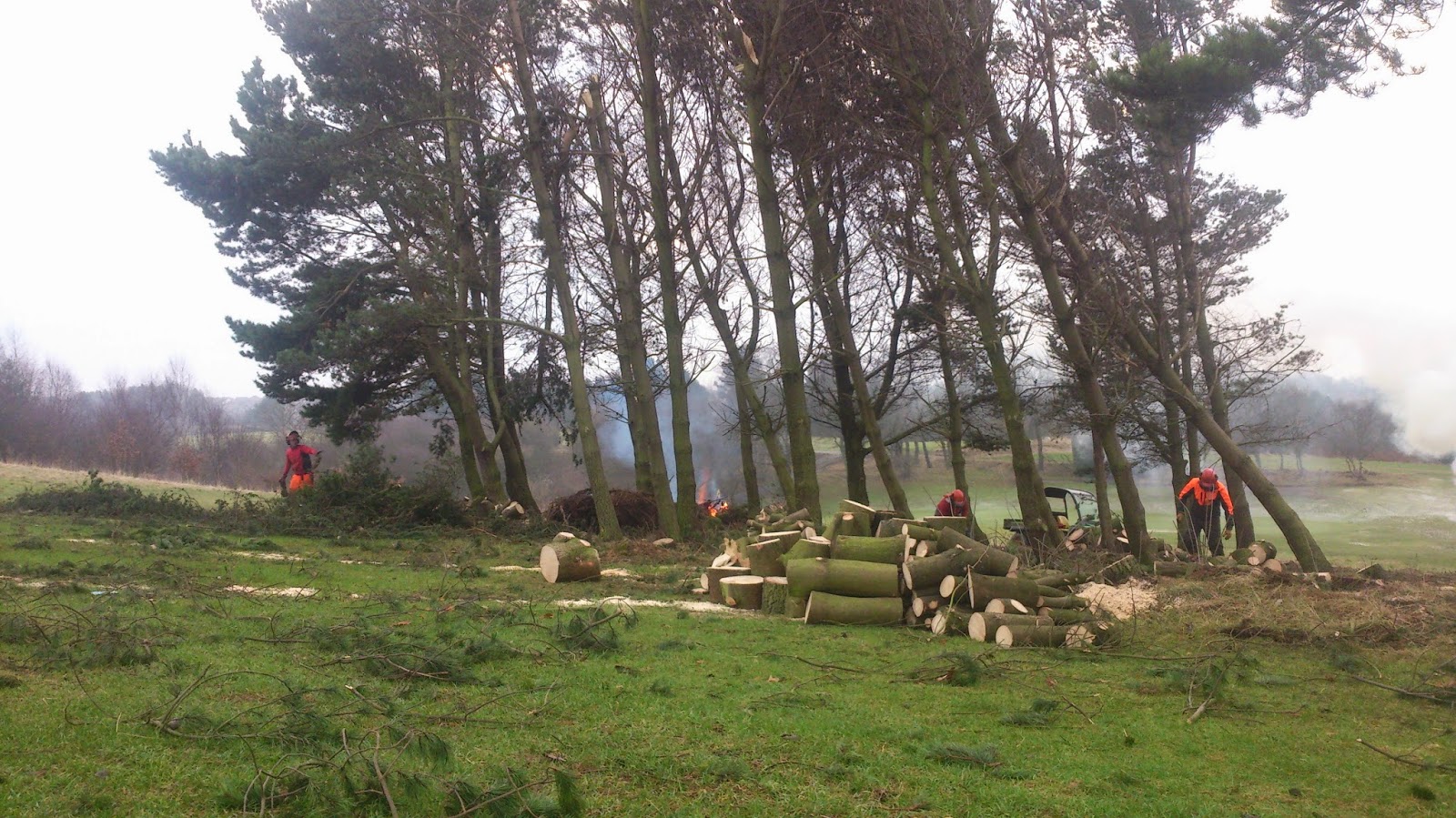
Over the winter there has been bursts of tree work going on around the course. The reasons for this work are:-

  • Tree felling following recent strong winds, most notably around the 12th tee. 
  • 'Crowning' as basic tree maintenance.  This involves removing lower branches and will improve accessibility for mowers, as well as helping you find your golf ball more easily!  It also allows the tree to grow properly.
  • Felling to reduce tree numbers which allows more desirable trees to grow and flourish.
  • Improve much needed light and air movement for the turf, especially around the greens.  
  • General scrub clearance (such as 'suckers', brambles etc) that sprout up from nothing and eventually suffocate more desirable species.

Below are photos of some of the work carried out.


Following recent strong winds early January. - 11th / 12th.

Work well underway around the 11th / 12th.

A lot of wood and not many trees left, 11th / 12th.


The 6th medal tee 'carry' now has a clear sight to the green.

Clear view to 6th green and more aesthetically pleasing.


BEFORE - looking back to medal tee.


AFTER - looking back to medal tee.


10th TEE


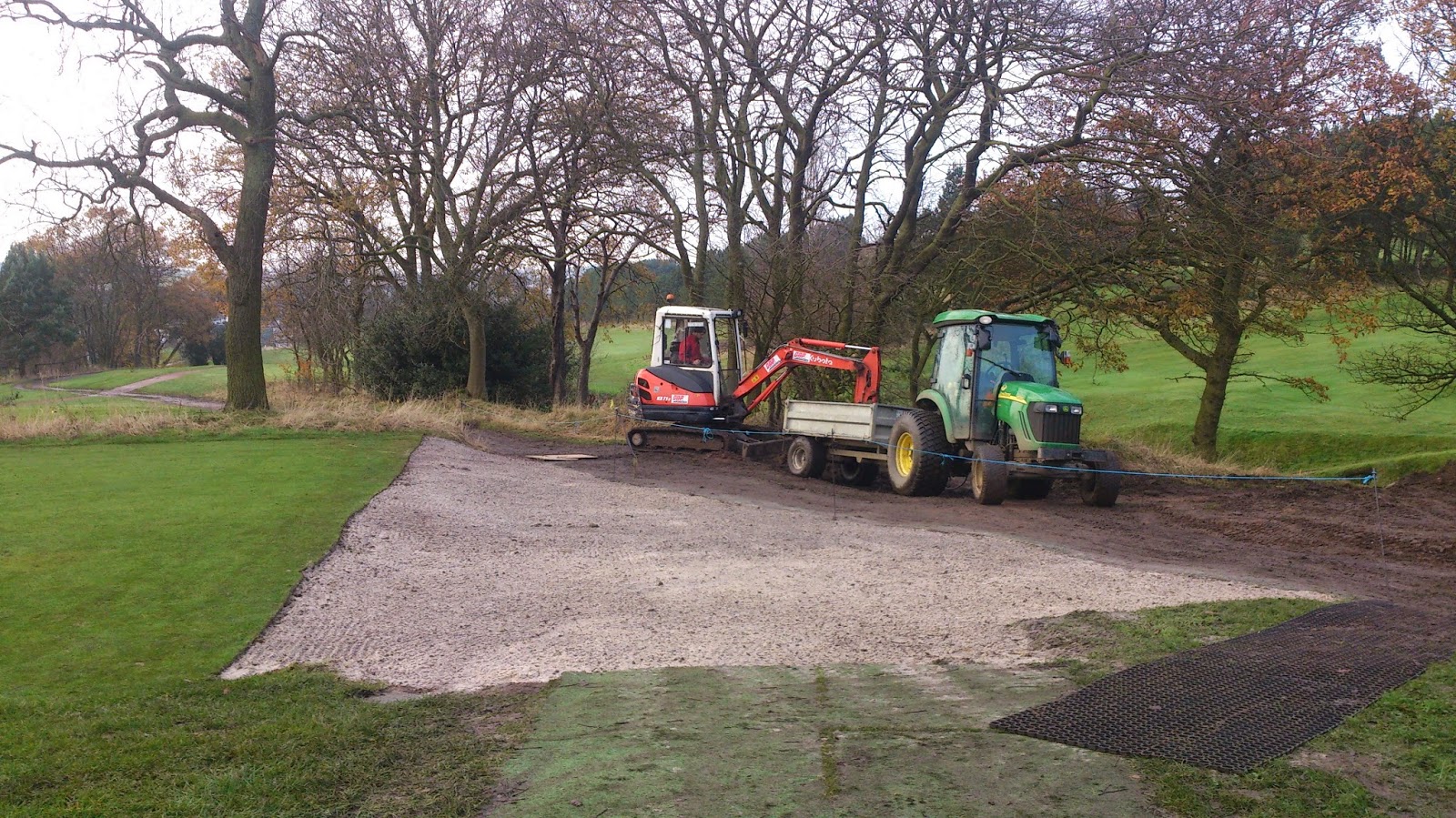
Soil removed from drainage work for the 9th green has been dumped around a previously used 10th tee.  This is with the possibility of re instating the use of this tee, even as an additional tee or winter tee.


An old 10th tee.

Soil dumped and tracked in around bank at 10th.


Drainage work on the greens is expected to be fully complete, with turf layed by next week.  Look out for additional posts on some of these points, giving a bit more information throughout the various stages of the project.

Remember by entering your email address in box at top right side, you will automatically be notified with any new posts.  


Tuesday, 27 January 2015

18th GREEN DRAINAGE


We have started some drainage work on the 18th green this week with the turf lifted on Monday 26th January.  

The area of the green where water initially starts to puddle is along the back edge, as illustrated in photo below.

18th green - December 2013.

We are initially targeting this area of the green by installing sub surface drains. Two drain channels are being excavated along the back of the green and will be connected to an existing drain on the approach as a positive outlet.  


Once the drain is installed, a sand root zone will be back filled to a specific depth of 300 mm (12") and will be carefully consolidated every few inches.  When the back filling of root zone is complete, the turf will then be re layed.

Turf is cut, using a turf cutter machine and put to the side.


Now the turf has been removed, boards are layed ready for the trencher machine to excavate the drain line.  Use of boards are essential to protect the green surface during the work.


'Kanga' pedestrian trencher midway along the first line.


Wheel barrows are used to remove to root zone from trench, then load to trailer.

Work in progress.....


Tuesday, 13 January 2015

GREENS DRAINAGE PLANS


Having previously worked on the west coast of Scotland for four years - Loch Lomond GC, you quickly learn how paramount good drainage is when providing a playing surface and managing turf.

At Pitreavie, in order to maximise use of the main greens all your round and provide firmer playing surfaces, an improvement in drainage is essential.


9th Green after prolonged rainfall in January 2014.


Over the past 12 months, drainage requirements have been evaluated with a progressive action plan to be implemented over the next few years.  There are four different areas needing addressed to fully solve the surface water issues:

  • Intercepting excess water before it reaches the playing surfaces.  
  • Surrounding vegetation management to encourage drying out.
  • Cultural turf management to allow water to infiltrate through the soil.
  • Drainage systems to transport the excess water away from the playing surfaces.


INTERCEPTION OF SURFACE WATER

This involves installing drainage in surrounding areas and re-contouring ground to intercept and divert surface water away from the green.  A good example of this would be the recent work carried out left side of 12th green / 13th tee area which has proved successful at diverting water away from the green.


SURROUNDING VEGETATION MANAGEMENT TO ENCOURAGE DRYING OUT

Direct rainfall onto greens or tees cannot be avoided but making sure surrounding vegetation isn't causing shading or blocking airflow can make a big difference to the speed a green dries after rainfall, or a frost disappears in winter months.  Appropriate thinning of trees and shrubs to reduce shade and allow more sunlight will also increase ventilation and help dry out wet surfaces.  


12th Green in regular shade that needs to be addressed.


We are starting to manage trees, shrubs and woodland across the course as part of a wider woodland management plan.  Look out for a separate posts about tree work plans and progress.  As I write this, mother nature is having it's influence with the trees!


CULTURAL TURF MANAGEMENT TO IMPROVE DRAINAGE

Thatch control is paramount for allowing water to infiltrate through the grass, organic matter (thatch) and subsoil giving firm dry playing surfaces.  Excessive thatch causes greens to be too soft and too water retentive.  In some cases we currently have thatch levels 50-60% higher than desirable.


Thatch acts just like a sponge - holds water.

We are developing a solid cultural maintenance program to reduce thatch by increasing aeration, sand topdressing, verti cutting as well as other sound agronomic practices to reduce the thatch layer.


DRAINAGE SYSTEMS

Another stage of removing water from greens is by installing drainage into the sub soil that feeds water away from the green into a positive outlet.  Due to the topography of the course and burns available, we are fortunate to have positive drainage outlets.  

A combination of conventional pipe and an innovative Aquadyne drainage panel is being utilised to achieve this.  Initially we are just installing drains in the lowest parts of the green (or areas that puddle) with view to installing additional drains as required.  The 9th green is the first green to be done (work started), followed by drainage to the 3rd, 7th, 15th, 16th and 18th which are planned at the end of January 2015.

Drains will be intially targeted in specific areas with performance evaluated. 


Aquadyne drainage panels are a sustainable product which are tried and tested. We are using aquadyne because it's durable and there will be less chance of drain lines drying out or settlement. 

Look up posts for each green as the work is carried out.


Tuesday, 18 November 2014

12th Green Drainage (LHS) & 13th Path Improvement


Today (Tuesday 18th November) we started work to improve the drainage problem on the LHS of the 12th green.  Surface water and puddling is becoming more evident despite this being a sand based constructed green.

Surface water on left hand side of 12th green.

Excessive surface thatch and shade problems around the green (poor sunlight & air flow) will contribute to the surface water we can see in above photo.

Whilst the thatch and shade problems also need addressing, you will notice from the short video below that much of the water comes from the path near the green and by the 13th tee.  Video footage is a bit shaky but hopefully you get the idea!


Over time, water running from the path has deteriorated the turf near the green.


This area is being dug out and will be re instated as grass by turfing back to the path edge.

 The other work planned for this project includes:-

  • Surface channel drains being installed along path edge to divert most of water before reaching the green.
  • Astro turf at top of the hill has been lifted and to be replaced with the black rubber mats using path material to fill the holes.
  • The various bits of astro turf by the 13th tee are being lifted and the tee bank being graded to allow surface water run off.  The banking will then be re turfed to the path edge.  This will also give better definition and make this area more pleasing to the eye.
  • Other surface channel drains and a catchment area will be installed to remove surface water from the 13th tee area.
  • Install drainage line on outer edge of 12th green.


Astro turf been rolled up, ready to be taken away.


Hardcore material being removed.

Hardcore not to be wasted and used to do some much needed road repair, just a few yards away!


Drainage being installed using surface catchment channels at points along the path, feeding into main outlet pipe which will discharge into the burn.


 Now for turf preparation and laying by the 12th green.

Preparation prior to turfing with surface drainage installed.
Robin and James laying the turf on 28th November.


Turfing complete, drain channel installed and roped off during turf 'growing in'.


Turf preparation and laying by 13th tee.


Ready for turf!

Turf layed on 28th November.


Now for the path surface finishing.

Compacting plate used.

Rubber mats replaces the astro turf.
Path material evenly raked out.


Most water from surrounding area has been intercepted using drain channels on paths and has worked well following recent rainfall.  

The final phase of the planned work is to improve drainage on the edge of the green.  Below you can see turf being lifted and root zone removed, down to gravel layer.

Turf has been cut and lifted.
Root zone being dug out.
Root zone on top of gravel layer.
                                         

In the above photo of the root zone shows a heavy thatch layer at the top along with an orange colour which has been aneorobic and retaining excess water.  The thatch layer will significantly slow down water infiltration / percolation through the surface and root zone.


We tested the gravel layer and drain - short video clip below illustrates water percolation is good, so not necessary to remove.
A simple test and gives confidence that sub surface drainage works.


Fresh root zone being replaced and consolidated down.


Turf at front edge of green uneven, sometimes causing scalping so lifted
and smoothed out.


All turf re layed on Tuesday 16th December 2014.


TURFING near 6th GREEN


The turf quality left hand side of the 6th green has deterioted which has been highlighted following two dry summers.  Reasons for the turf deteriorating in this area is due to a combination of the following:-


  • High levels of concentrated traffic from golf and greenkeeping equipment.
  • Lack of water, aeration and nutrient for growth.
  • Established trees in surrounding area that takes water away from plant.

Before Turfing.
Before Turfing.


Being only few yards from the green and very much in play, it's essential this was re turfed to improve playability and make more aesthetically pleasing.  A straightforward process of preparing the ground then re laying new turf - a hard wear perennial ryegrass and fescue mix was used.


Monday 20th October, a few days after turfing.

Monday 20th October, a few days after turfing.


October is an ideal time for carrying out this job because there is no additional pressure for watering or the grass drying out like during summer months. Roots are still active and will already be established by next spring.

Tuesday 18th November, about 4 weeks after turf layed.


Turf now strongly rooted and blending in well with surrounding area.

A straight forward job carried out by the greenstaff with little cost and a notable improvement.  The next challenge is to maintain a good grass cover on this area throughout the year.  Plans are in the pipeline to add sprinkler heads to cover this area which would help make more manageable during dry spells.